F
Facundo Ezequiel Diaz Cappella
LinkedIn Post
💬 Español
La Ley de IA de la UE ya está en vigor, y aplica a muchas más empresas de las que la gente cree. 🇪🇺
Un repaso rápido para quien aún no la tenga clara:
QUIÉN Y CUÁNDO
La Unión Europea la aprobó como Reglamento (UE) 2024/1689, el primer marco legal integral sobre inteligencia artificial del mundo. Entró en vigor el 1 de agosto de 2024 y empezó a aplicarse el 2 de agosto de 2026.
QUÉ BUSCA
Fomentar una IA fiable en Europa mediante un enfoque basado en el riesgo, no en la tecnología. Los usos inaceptables se prohíben. Los sistemas de alto riesgo (contratación, crédito, educación, biometría, infraestructuras críticas) cargan con obligaciones fuertes. El resto, sobre todo transparencia: avisar cuando hablas con una IA y etiquetar el contenido sintético.
A QUÉ MERCADO AFECTA
No solo a empresas europeas. Si tu sistema de IA se comercializa en la UE o su resultado se usa allí, estás dentro, tengas la sede donde la tengas.
POR QUÉ
Porque hacía falta una regla común: proteger derechos fundamentales y seguridad, y a la vez dar seguridad jurídica a quien innova. Un solo estándar para 27 países en lugar de 27 normas distintas.
EL DATO QUE MUCHOS SE PIERDEN 🚦
Las obligaciones para sistemas de alto riesgo independientes se retrasaron al 2 de diciembre de 2027, y al 2 de agosto de 2028 para la IA integrada en productos regulados. Pero ojo: las obligaciones de transparencia y los poderes de supervisión sobre modelos de propósito general ya están activos desde el 2 de agosto de 2026.
💬 English
The EU AI Act is now live, and it applies to far more companies than people think. 🇪🇺
A quick recap for anyone still catching up:
WHO AND WHEN
The European Union passed it as Regulation (EU) 2024/1689, the first comprehensive legal framework on AI in the world. It entered into force on 1 August 2024 and became applicable on 2 August 2026.
WHAT IT AIMS FOR
Fostering trustworthy AI in Europe through a risk-based approach, not a technology-based one. Unacceptable uses are banned. High-risk systems (hiring, credit, education, biometrics, critical infrastructure) carry heavy obligations. Everything else is mostly transparency: tell people when they're talking to an AI, label synthetic content.
WHAT MARKET IT TOUCHES
Not just European companies. If your AI system is placed on the EU market or its output is used there, you're in scope, no matter where you're headquartered.
WHY IT EXISTS
Because a common rulebook was overdue: protect fundamental rights and safety, while giving builders legal certainty. One standard for 27 countries instead of 27 different ones.
THE PART MOST PEOPLE MISS 🚦
Obligations for stand-alone high-risk systems were pushed to 2 December 2027, and to 2 August 2028 for AI embedded in regulated products. But careful: transparency duties and enforcement powers over general-purpose AI providers have been active since 2 August 2026.
F
Facundo Ezequiel Diaz Cappella
LinkedIn Post
💬 Español
🪆 ¿Y si tu agente de IA no necesitara ver todas sus herramientas a la vez?
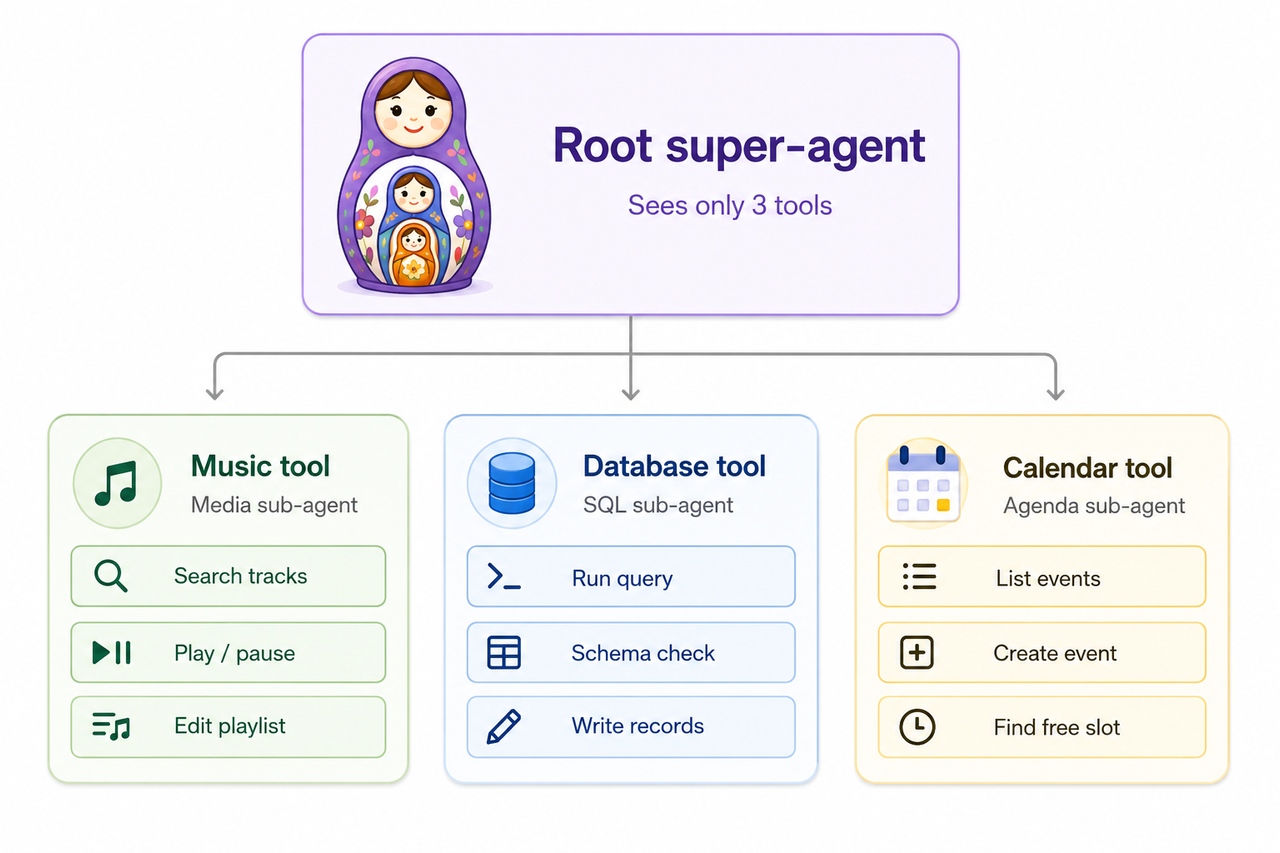
Esa es la idea detrás de la técnica Matrioska (agentes jerárquicos o patrón supervisor): en lugar de exponer 40 herramientas a un único agente, agrupas las herramientas granulares dentro de sub-agentes y envuelves cada sub-agente en una sola herramienta fachada.
El super-agente principal solo ve un puñado de opciones: "Herramienta de Base de Datos", "Herramienta de Música".
Cuando llama a una, por dentro se ejecuta un sub-agente especialista con sus propias tools, y devuelve el resultado agregado.
Notas:
→ Scoping de estado y memoria: no pases el historial completo de la conversación al sub-agente. Que la herramienta de alto nivel genere un resumen conciso de la tarea.
→ El coste de anidar: cada llamada a una fachada es un ciclo completo de inferencia, no una función. Ganas contexto, pagas en latencia y en depuración.
💡 A veces la mejor arquitectura no es la que añade más herramientas, sino la que decide cuáles esconder.
💬 English
🪆 What if your AI agent didn't need to see all its tools at once?
That's the idea behind the Matryoshka technique (hierarchical or supervisor agents): instead of exposing 40 tools to a single agent, you group the granular tools inside sub-agents and wrap each sub-agent in one facade tool.
The primary super-agent only sees a handful of options: "Database Tool", "Media Tool".
When it calls one, an internal specialist sub-agent executes with its own tools and returns the aggregated result.
Notes:
→ State & memory scoping: don't pass full conversation histories down to sub-agents. Have the top-level tool generate a concise task summary instead.
→ The cost of nesting: every facade call is a full inference loop, not a function call. You buy context back and pay for it in latency and debuggability.
💡 Sometimes the best architecture isn't the one that adds more tools, it's the one that decides which ones to hide.
F
Facundo Ezequiel Diaz Cappella
LinkedIn Post
💬 Español🚀 Otra gran manera de certificar tu conocimiento en IA.Si tu día a día consiste en definir la estrategia de producto de IA, identificar resultados de negocio y evaluar proveedores de IA, esta certificación es para ti.Los líderes de IA impulsan las decisiones de implementación equilibrando costo, rendimiento y riesgo, siempre asegurando la alineación con la estrategia de la organización.💡 Te recomiendo revisar la certificación "Nebius Certified AI Leader" y aprovechar la oferta early bird disponible por tiempo limitado.🔗 Links en la sección de comentarios.💬 English🚀 Another great way to certify your knowledge in AI.If your tasks involve defining AI product strategy, identifying business outcomes, and evaluating AI vendors, this certification is for you.AI leaders drive implementation decisions by balancing cost, performance, and risk, while ensuring alignment with organizational strategy.💡 You should check out the "Nebius Certified AI Leader" certification and take advantage of the early bird offer while it lasts.🔗 Links in the comment section.https://lnkd.in/dQJUs9RU F
Facundo Ezequiel Diaz Cappella
LinkedIn Post
💬 Español
Interesante 🤔 Mientras la mayoría de las grandes corporaciones sigue apostando por los modelos privados, los últimos datos de Vercel muestran que los modelos abiertos están ganando terreno en silencio, aunque no donde uno esperaría.
Según el AI Gateway Production Index de Vercel (datos de junio 2026), los modelos open-weight ya representan el 29% de todos los tokens que pasan por el gateway, frente al 11% en abril, usando menos del 4% del gasto total. DeepSeek por sí solo llega al 22.6% del volumen de tokens, a menos de dos puntos de Google.
Pero no es una toma total: Anthropic sigue capturando el 61% del gasto con solo el 32% de los tokens, y más del 72% del gasto en cada caso de uso de alto riesgo, como agentes de código o automatización de back-office. El patrón es claro: los equipos enrutan el trabajo de alto volumen y bajo riesgo hacia modelos abiertos baratos, y reservan los modelos frontier para las tareas donde equivocarse sale caro.
La pregunta ya no es si los modelos abiertos pueden competir, sino cuánto de tu volumen de bajo riesgo sigue yendo a un modelo que estás pagando de más 🚀
¿Tu equipo ya está dividiendo el tráfico así, o todavía enruta todo al mismo modelo?
💬 English
Interesting 🤔 While most big corporations keep betting on private models, Vercel's latest data shows open models are quietly gaining serious ground, just not where you'd expect.
According to Vercel's AI Gateway Production Index (June 2026 data), open-weight models now run 29% of all tokens routed through the gateway, up from just 11% in April, while using under 4% of total spend. DeepSeek alone is at 22.6% of token volume, less than two points behind Google.
But it's not a full takeover: Anthropic still captures 61% of spend on 32% of tokens, and over 72% of spend in every high-stakes use case like coding agents and back-office automation. The pattern is clear — teams are routing high-volume, lower-risk work to cheap open models, and keeping frontier models for the tasks where mistakes are expensive.
The question is no longer whether open models can compete, but how much of your low-stakes volume you're still sending to a model you're overpaying for 🚀
Is your team already splitting traffic this way, or still routing everything to the same model?
F
Facundo Ezequiel Diaz Cappella
LinkedIn Post
💬 Español
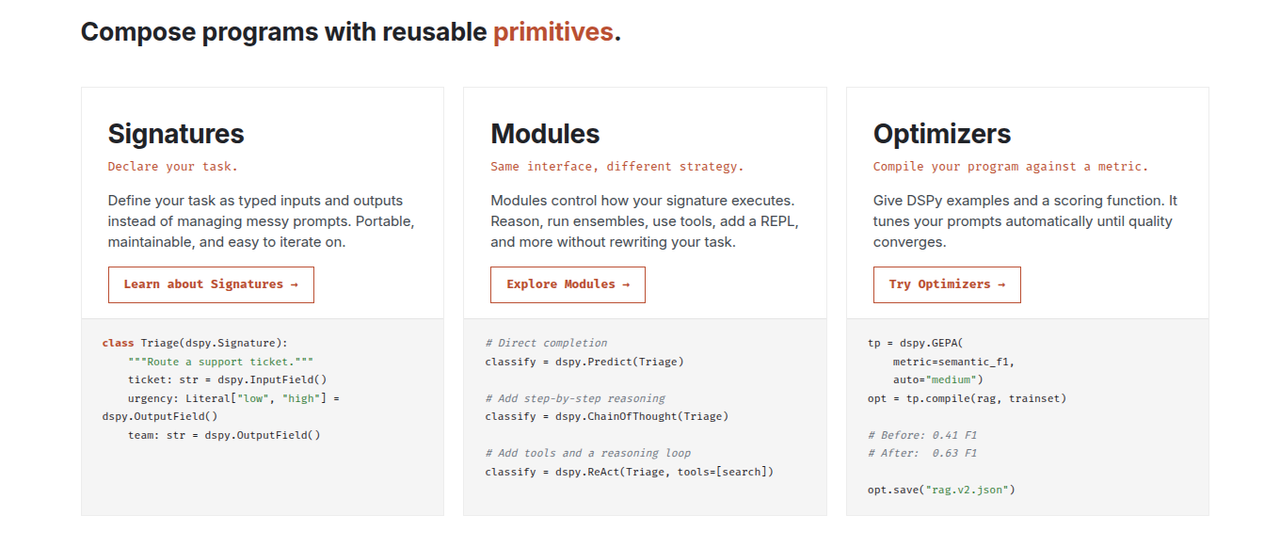
Hace unos días me topé con un framework [DSPy] que me pareció muy interesante para construir soluciones agénticas 🤖
Lo que me llamó la atención es su enfoque: en lugar de depender de un prompt muy elaborado, el propio framework te ayuda a estructurar el contexto que la solución necesita. Eso lo hace más práctico y robusto que alguna de las otras alternativas.
Todavía estoy experimentando con él para ver hasta dónde llega, pero la primera impresión es bastante positiva. Y un punto a favor: está construido en Python 🐍
¿Alguien más lo ha probado? Me interesa saber qué experiencias han tenido.
👇 Dejo el link al proyecto en los comentarios.
💬 English
A few days ago I stumbled upon a framework [DSPy] for building agentic solutions that I found genuinely interesting 🤖
What caught my attention is its approach: rather than relying on a heavy, overly-engineered prompt, the framework itself helps you structure the context your solution needs. That makes it feel more practical and resilient compared to other options.
I'm still experimenting with it to see how far it can go, but first impressions are solid. And a big plus, it's built in Python 🐍
Has anyone else tried it? Would love to hear your experiences.
👇 Dropping the link to the project in the comments.
F
Facundo Ezequiel Diaz Cappella
LinkedIn Post
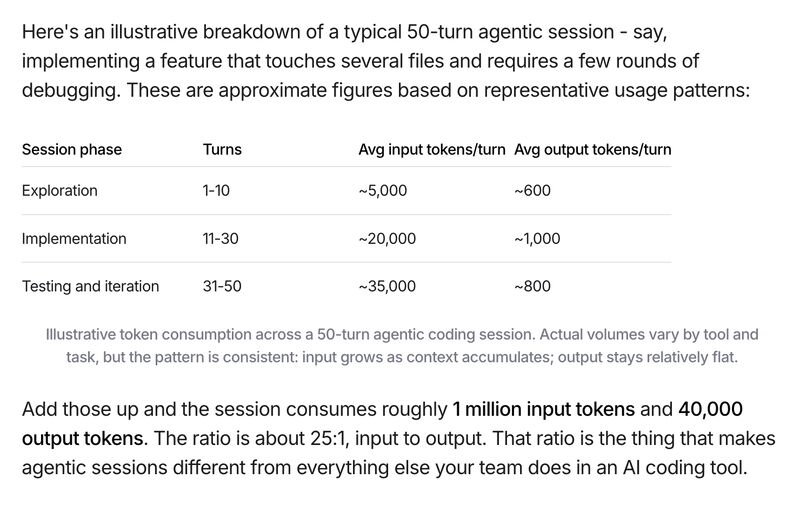
Interesante análisis para tener en cuenta a la hora de usar skills como Caveman "input tokens outnumber output by 20-25x. The input price is the number that actually drives your bill."
F
Facundo Ezequiel Diaz Cappella
LinkedIn Post
💬 Español
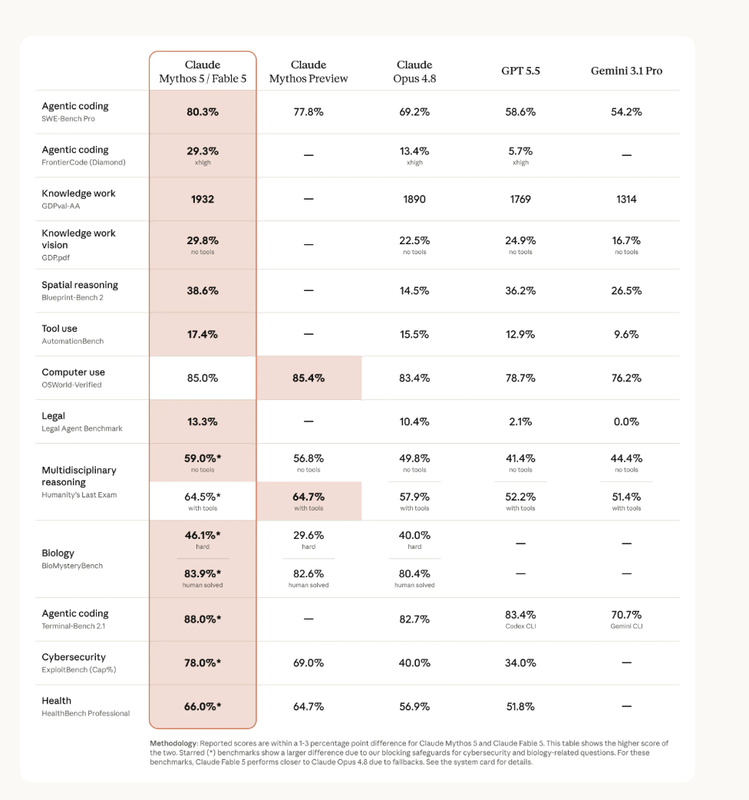
Anthropic ha lanzado un nuevo modelo al público general 🚀. Diferentes benchmarks sugieren que es claramente superior a su predecesor Claude Opus y que también supera a competidores como Gemini y los modelos de OpenAI. Curiosamente, este modelo forma parte de la familia Mythos, lo que significa que comparte las mismas capacidades base, pero en esta versión pública Anthropic ha añadido guardrails que impiden el acceso a conocimiento relacionado con ciberseguridad, biología y métodos de distillation.
(distillation)Esto significa que no podremos usar Fable para construir mejores modelos, básicamente un mecanismo de protección frente a la competencia.
Estas salvaguardas se están viendo por primera vez en modelos de Anthropic. Ya hay varias publicaciones de la comunidad discutiéndolas, e incluso hay informes que sugieren que los guardrails no son totalmente fiables, con ejemplos de falsos negativos 😳.
Anthropic suspendió el uso ayer (15 de junio de 2026) siguiendo una orden del gobierno de EE. UU. El timing también resulta bastante conveniente para Anthropic, especialmente teniendo en cuenta las preocupaciones de la comunidad sobre los guardrails, incluyendo reportes de falsos negativos.
Será interesante ver cuánto tardan los modelos open en alcanzar este nivel. El tiempo lo dirá ⏳
Documento oficial de la release del modelo en los cometarios.
💬 English
Anthropic has released a new model to the general public 🚀. Different benchmarks suggest it is clearly superior to its predecessor Claude Opus and also ranks ahead of competitors like Gemini and OpenAI models. Interestingly, this is part of the Mythos family, meaning it shares the same core capabilities, but in this public release Anthropic has added safeguards that prevent access to knowledge related to cybersecurity, biology, and distillation methods.
(distillation)This means we won’t be able to use Fable to build better models,essentially a protection mechanism against competitive.
These safeguards are being seen for the first time in Anthropic models. There are already several community posts discussing them, and there are even reports suggesting the guardrails may not be fully reliable, with examples of false negatives 😳.
Anthropic suspended usage yesterday (June 15, 2026) following an order from the US government. The timing also feels very convenient for Anthropic, especially given the guardrail concerns raised by the community, including reports of false negatives.
It will be interesting to see how long it takes for open models to reach this level. Time will tell ⏳
Check official system card in the comment section
F
Facundo Ezequiel Diaz Cappella
LinkedIn Post
💬 Español
De Software Engineer a Context Engineer 🧠
Este término está en tendencia hace un tiempo, y por buena razón. Cuanto más profundizas en este enfoque, más matices descubres.
Una verdad que pocos dicen en voz alta: si la IA falla, muchas veces el problema no está en el modelo, está en el contexto. Ahí es exactamente donde el ingeniero tiene que brillar.
Dominar Context Engineering implica saber evitar alucinaciones, optimizar el uso de tokens y asegurarse de que cada pieza de información que entra en la ventana de contexto tenga un propósito claro. Nada de más, nada de menos.
Andrej Karpathy lo resume mejor de lo que yo podría: "Context engineering is the delicate art and science of filling the context window with just the right information for the next step"
Requiere práctica constante y mantenerse al día en un campo que evoluciona rápido.
El link al tweet de Andrej en los comentarios, por si quieres leerlo directamente. ✨
💬 English
From Software Engineer to Context Engineer 🧠
The term is everywhere right now, and for good reason. The more you dig into it, the more layers you find.
Here's something not enough people say out loud: when AI gets it wrong, the model is often not the problem. The context is. And that's exactly where the engineer needs to step up.
Mastering Context Engineering means knowing how to prevent hallucinations, optimize token usage, and ensuring every piece of information entering the context window serves a clear purpose. Nothing more, nothing less.
Andrej Karpathy puts it better than I ever could: "Context engineering is the delicate art and science of filling the context window with just the right information for the next step"
It takes consistent practice and a commitment to staying current in a field that moves fast.
Dropping the link to Andrej's tweet in the comments if you want to read it directly. ✨